
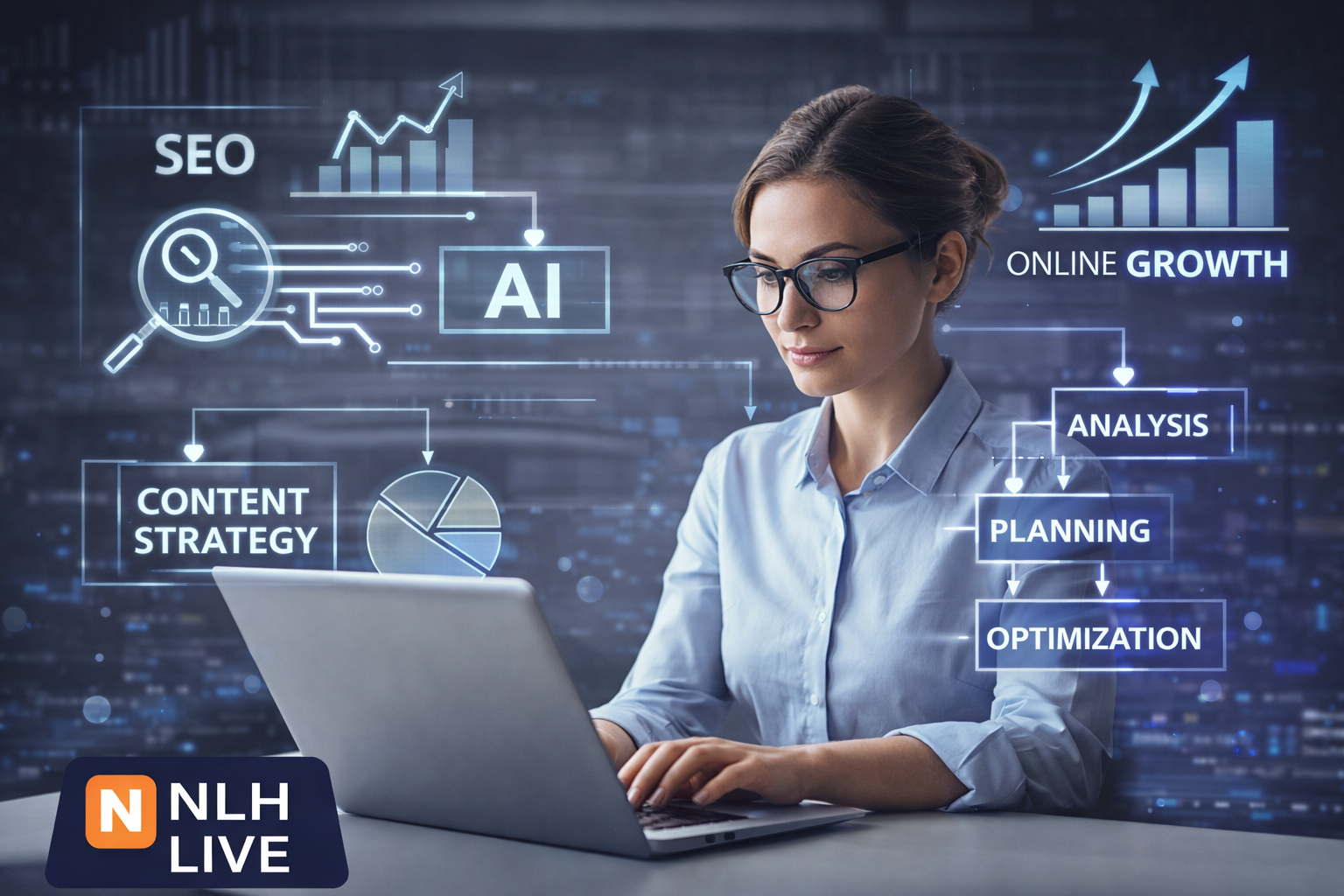
Artificial intelligence (AI) is no longer a future concept—it is actively shaping how websites create content, rank in search engines, and grow sustainably online. From smarter keyword analysis to personalized user experiences, AI has become a foundational part of modern digital marketing.
For website owners, bloggers, and digital marketers, understanding how AI influences content strategy, SEO, and long-term growth is essential—not to replace human creativity, but to enhance it.
How AI Is Changing Content Strategy
Traditional content strategies relied heavily on intuition, manual research, and static publishing schedules. AI has transformed this process into a data-driven, adaptive system.
AI-powered tools now help marketers:
-
Analyze search intent more accurately
-
Identify content gaps and trending topics
-
Optimize structure, tone, and readability
-
Predict which content formats perform best
However, successful content still requires a human touch. AI supports efficiency, but value comes from user-focused storytelling, clarity, and trust—principles discussed in detail in Creating User-Focused Content That Engages and Converts.
AI and the Evolution of SEO
SEO has evolved far beyond keyword stuffing and backlink quantity. Search engines now use AI and machine learning to understand context, relevance, and user satisfaction.
Modern AI-driven SEO focuses on:
-
Search intent over exact-match keywords
-
Content depth and topical authority
-
User experience signals (time on page, engagement, readability)
-
Semantic relationships between topics
This shift means content strategies must align with search behavior, not just algorithms. A deeper explanation of this approach can be found in SEO Content Strategy Beyond Keywords and Clicks.
Smarter Keyword Research with AI
AI tools analyze massive datasets to uncover:
-
Long-tail keyword opportunities
-
Related questions users are asking
-
Emerging trends before they peak
But keywords are only the starting point. AI helps map keywords to content clusters, allowing websites to build authority around entire topics rather than isolated pages—a strategy aligned with long-term growth outlined in How SEO and Content Strategy Work Together for Long-Term Website Growth.
AI-Driven Personalization and User Experience
AI enables websites to deliver more personalized experiences by:
-
Recommending relevant content
-
Adjusting layouts based on user behavior
-
Improving mobile responsiveness and accessibility
Search engines reward sites that prioritize user experience, especially on mobile. Optimizing design and performance is critical, as explained in Designing Mobile-Responsive Websites for Modern Users.
Automation Without Losing Authenticity
One common concern is that AI-generated or AI-assisted content may feel robotic. The solution is balance.
Effective marketers use AI to:
-
Automate research and optimization
-
Improve consistency and publishing speed
-
Analyze performance data
But they preserve authenticity through:
-
Original insights
-
Clear brand voice
-
Honest, experience-based storytelling
This same balance is essential in email and communication strategies, as discussed in Email Marketing Automation: Scaling Personalization Without Losing Authenticity.
AI’s Role in Sustainable Online Growth
AI supports growth, but it doesn’t replace fundamentals. Sustainable online success still depends on:
-
Consistent, high-quality publishing
-
Clear site structure and internal linking
-
Ethical SEO practices
-
Audience trust
Websites that combine AI tools with strong foundations achieve scalable growth without relying on paid ads or short-term tactics—an approach explored further in A Beginner’s Guide to Growing Online Visibility Without Paid Ads.
Preparing for the Future of AI in Digital Marketing
As AI continues to evolve, marketers should focus on:
-
Learning how AI tools work (not blindly trusting outputs)
-
Prioritizing helpful, people-first content
-
Using AI to enhance—not replace—strategy and creativity
AI is not a shortcut to success. It is a multiplier for those who already understand their audience, their goals, and the value of quality content.
Final Thoughts
The impact of AI on content strategy, SEO, and online growth is profound—but not disruptive for those who adapt thoughtfully. By combining AI-driven insights with human creativity, ethical SEO practices, and user-focused design, websites can build long-term authority and trust.
Leave a Reply