
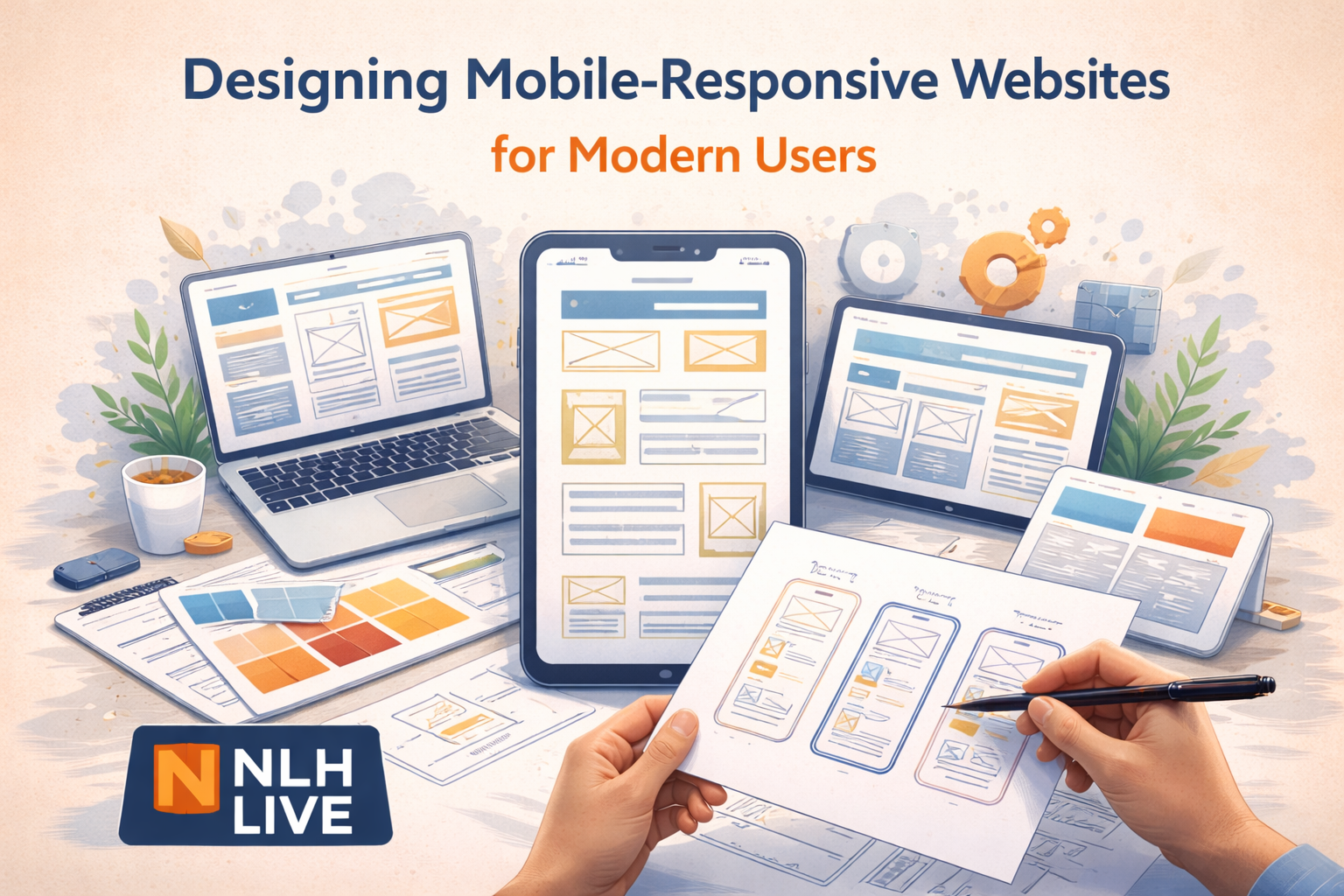
The way people access the internet has changed dramatically. Today, mobile devices account for the majority of global web traffic, making mobile-responsive website design no longer optional—it’s essential. For website owners, bloggers, and digital marketers, creating a seamless mobile experience is critical for usability, search visibility, and long-term growth.
In this guide, we’ll explore why mobile-responsive design matters, what makes a website truly mobile-friendly, and how modern website owners can implement best practices without overcomplicating the process.
Why Mobile-Responsive Design Matters Today
Modern users expect websites to load quickly, display correctly, and function smoothly on any screen size. A site that looks great on desktop but breaks on mobile can quickly lose visitors, credibility, and conversions.
From a search perspective, Google uses mobile-first indexing, meaning the mobile version of your site is considered the primary version. This makes mobile responsiveness directly tied to SEO performance and visibility.
If you’re building a long-term digital presence, mobile optimization works hand-in-hand with broader strategies such as content quality and SEO planning. This is especially true when combined with approaches discussed in How SEO and Content Strategy Work Together for Long-Term Website Growth.
What Defines a Mobile-Responsive Website?
A mobile-responsive website automatically adapts its layout, images, and content to fit different screen sizes. But true responsiveness goes beyond resizing elements.
Key characteristics include:
-
Flexible grid layouts that adjust to screen width
-
Readable text without zooming
-
Touch-friendly buttons and navigation
-
Optimized images for faster loading
-
Minimal clutter and clear content hierarchy
These elements ensure users can comfortably browse, read, and interact—regardless of device.
User Experience Comes First
Mobile design should always prioritize real users, not just technical scores. Small frustrations—like tiny buttons or slow loading—quickly drive people away.
Designing with users in mind aligns closely with the principles outlined in Creating User-Focused Content That Engages and Converts. Content and design must work together to guide visitors naturally, whether they’re reading a blog, exploring services, or taking action.
Performance and Speed on Mobile Devices
Mobile users are often on slower connections, making performance optimization essential. Heavy scripts, oversized images, and unnecessary animations can severely impact load times.
Improving mobile speed not only enhances user experience but also supports SEO and accessibility—key pillars discussed in Understanding Modern Digital Marketing: Tools, Trends, and Best Practices.
Simple optimizations include:
-
Compressing images
-
Using efficient fonts
-
Limiting third-party scripts
-
Leveraging caching and CDN services
Mobile Design and Content Strategy Go Hand in Hand
Responsive design isn’t just about visuals—it affects how content is consumed. Mobile users scan quickly, so clear headings, short paragraphs, and logical structure are critical.
This approach complements broader digital marketing foundations, such as those covered in Digital Marketing Basics Every Website Owner Should Understand.
When content is easy to read on mobile, users stay longer, engage more, and are more likely to return—signals that search engines reward.
Common Mobile Design Mistakes to Avoid
Even well-intentioned websites often struggle with mobile usability due to a few common issues:
-
Overcrowded layouts
-
Text that’s too small to read
-
Pop-ups that block content
-
Navigation menus that are hard to use
-
Ignoring testing across devices
Avoiding these mistakes early saves time and prevents performance drops later.
Final Thoughts
Designing mobile-responsive websites is no longer a technical upgrade—it’s a core business requirement. A well-optimized mobile experience improves usability, strengthens SEO, and supports sustainable digital growth.
When mobile responsiveness is combined with smart content strategy, user-focused design, and long-term SEO planning, website owners create platforms that are not only functional—but future-proof.
For modern users, mobile isn’t an alternative version of your website.
It is your website.
Leave a Reply